Tongue root cancer, chemotherapy and Synthesit: how bioactive iron helps to withstand chemotherapy
Modern oncology has reached incredible heights, but the price of healing is still high. Aggressive treatments such as chemotherapy are aimed at destroying malignant cells, but healthy tissues inevitably fall under their attack. This creates a vicious circle: to defeat the disease, you need to continue treatment, but the patient's body may simply not be able to withstand the toxic load. A recent scientific publication in the journal Futurity Medicine (December 2025) sheds light on a promising solution to this problem — the use of bioactive iron citrate (known under the brand name Synthesit) as a maintenance therapy.
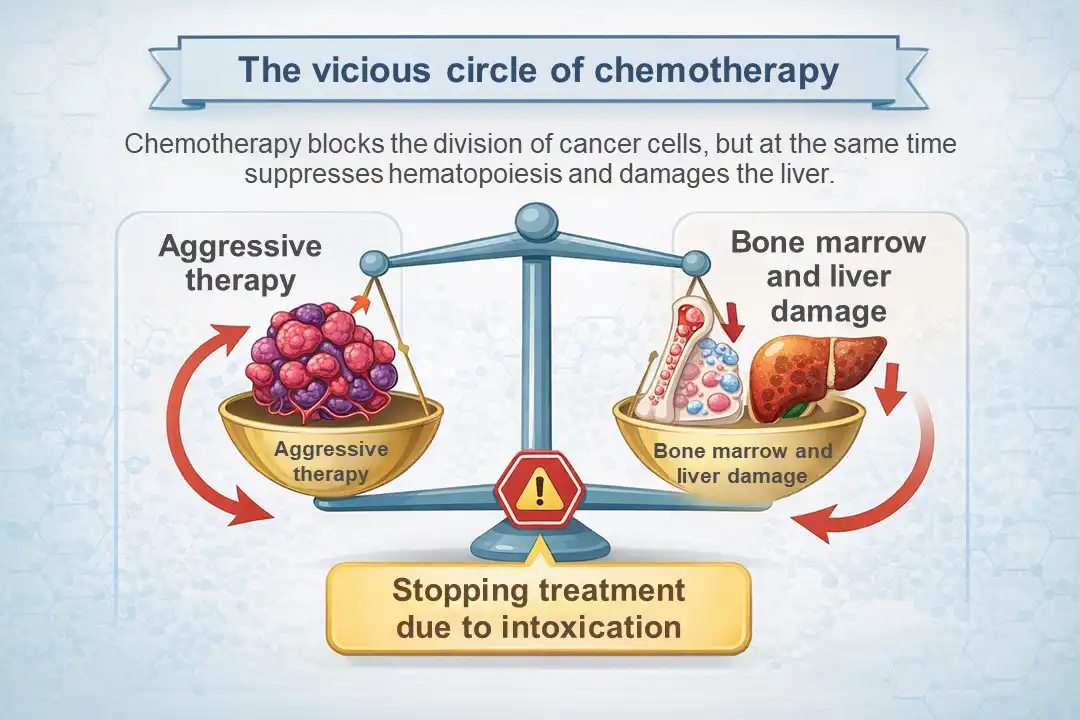
Cancer of the tongue root is one of the most insidious forms of tumors of the head and neck. Due to its proximity to the lymph nodes, the disease progresses rapidly, often reaching stage III even before the first symptoms are noticed. Standard treatment in such cases requires "heavy artillery" — a combination of cisplatin and 5-fluorouracil drugs.
These drugs effectively block the division of cancer cells, but they are not selective. Bone marrow cells responsible for hematopoiesis and liver cells are affected. As a result, patients develop myelosuppression, a condition in which the level of hemoglobin, white blood cells, and platelets drops to critical levels. To this is added hepatotoxicity — damage to the liver, which cannot cope with the processing of toxins. In such conditions, doctors are often forced to interrupt treatment, which gives the tumor a chance to grow again.
The researchers focused on Synthesit, a bioactive form of iron citrate obtained using a patented process that significantly increases its bioavailability. Unlike conventional iron supplements, this product is aimed not only at eliminating micronutrient deficiency, but also at stimulating the body's recovery processes.
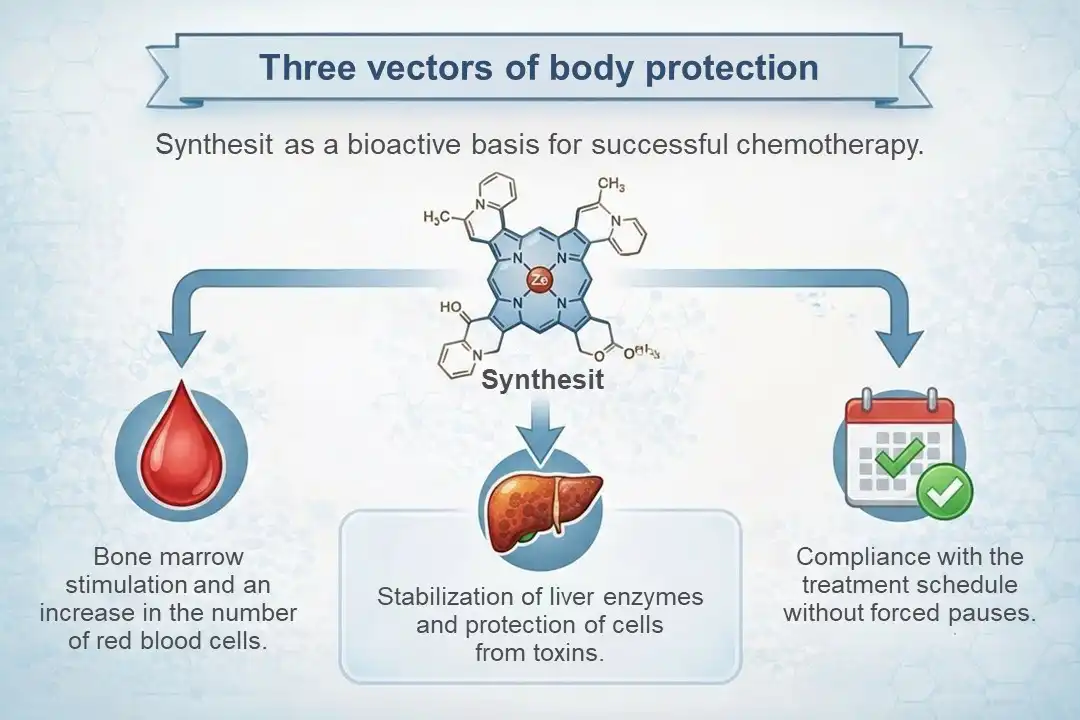
Scientific evidence shows that bioactive iron is able to support hematopoiesis and improve oxygen transport to tissues. For an oncological patient, this means not just an improvement in tests, but a real chance to continue fighting for life without painful pauses in treatment.
The authors of the article describe the story of 47-year-old patient L., who was diagnosed with stage III tongue root cancer with lymph node metastases in April 2024. The situation required immediate and aggressive chemotherapy.
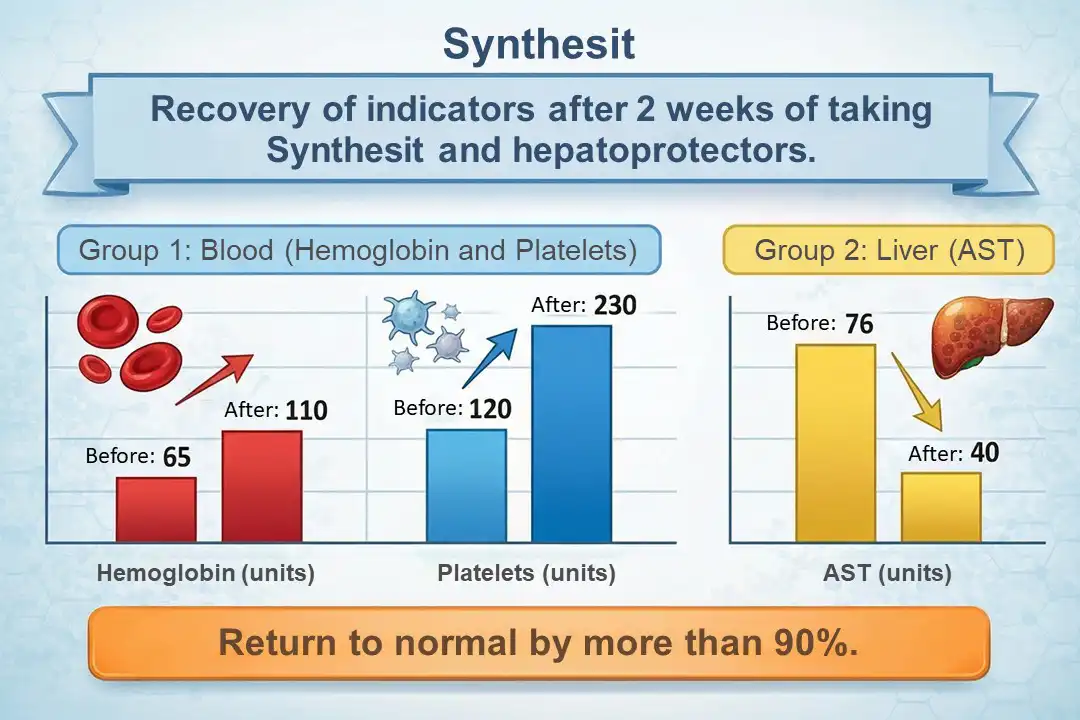
However, after the first cycle, the patient's body gave a serious malfunction. Deep anemia developed: the hemoglobin level dropped to a critical 65 g/l (at a rate above 120 g/l). The number of white blood cells and platelets decreased sharply, and there was a threat of bleeding and infections. In parallel, the tests showed liver damage: ALT and AST enzymes significantly exceeded the norm. The patient experienced severe weakness, nausea, and lack of appetite. It was impossible to continue chemotherapy in this condition — it could be fatal.
The doctors decided to temporarily suspend the main treatment and start intensive maintenance therapy. In addition to the standard hepatoprotectors and iron preparations, Synthesit was prescribed to the patient.

The results of the two-week course were impressive. In just 14 days, blood counts recovered by more than 90% of the baseline level. Hemoglobin has risen to safe levels, and liver enzymes have almost returned to normal. This allowed doctors to resume chemotherapy in full.
More importantly, the next four cycles of chemotherapy were carried out under the protection of Synthesit without serious complications. Hemoglobin not only did not fall, but also continued to grow, reaching 131 g/l by the fifth course, the indicator of a healthy person. Erythrocyte and hematocrit levels have stabilized.
Thanks to this support, the patient was able to complete the entire planned treatment path, including 42 Days of radiation therapy. The control MRI confirmed the stability of the disease, and the patient's condition was assessed as good.
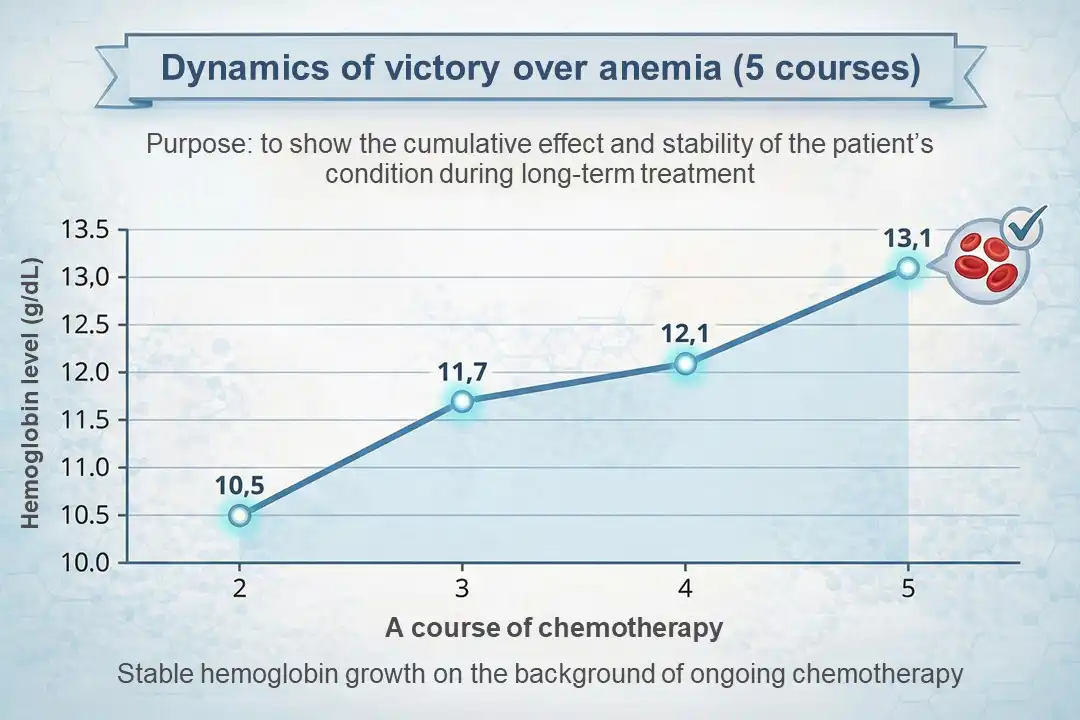
Table 1A. Analysis of proteins of blood plasma done in December 2019. Parameters that were out of the reference range are highlighted.
Table 1B. Blood analysis before taking Synthesit in February 2020, during taking in July 2021 and after taking it in March 2023. Parameters that were out of the reference range are highlighted. Values marked as dash mean no data available.
Figure 1. Comparison of various hematological parameters.

Table 2. Analysis of proteins of blood plasma done in March 2023.
This case is not just a story of one person's recovery, but an important evidence of the effectiveness of an integrative approach in oncology. Statistics show that anemia caused by chemotherapy affects from 30% to 90% of patients. This is a global problem that reduces the chances of successful treatment.
The researchers note that Synthesit may become a "missing link" in the protocols for cancer patients. Previously, similar positive results of using this drug have already been recorded in patients with pancreatic and fallopian tube cancer. Scientists also point to its potential ability to reduce the manifestations of neuropathy, excruciating pain in the extremities that often occur after taking cytostatics.
The mechanism of action of Synthesit in this case can be called synergetic. Together with classical support methods, he helped:
The authors of the scientific work emphasize that although the report of one case is not definitive evidence, the data obtained opens up new horizons. Bioactive iron citrate demonstrates the potential to become a standard addition to the treatment of head and neck cancer, and possibly other types of tumors.
For patients, this means a new quality of life during treatment. Instead of a grueling struggle with side effects, the body gets a resource for recovery. For doctors, it is a tool that allows them to adhere to strict therapy schedules, which directly affects survival.
This study calls on the medical community to conduct more extensive clinical trials of Synthesit. Perhaps it is precisely such adjuvant (auxiliary) means that will be the key to making cancer care not only more effective, but also more humane, reducing the burden of physical suffering on the way to recovery.
Original article: